Discharge chamber
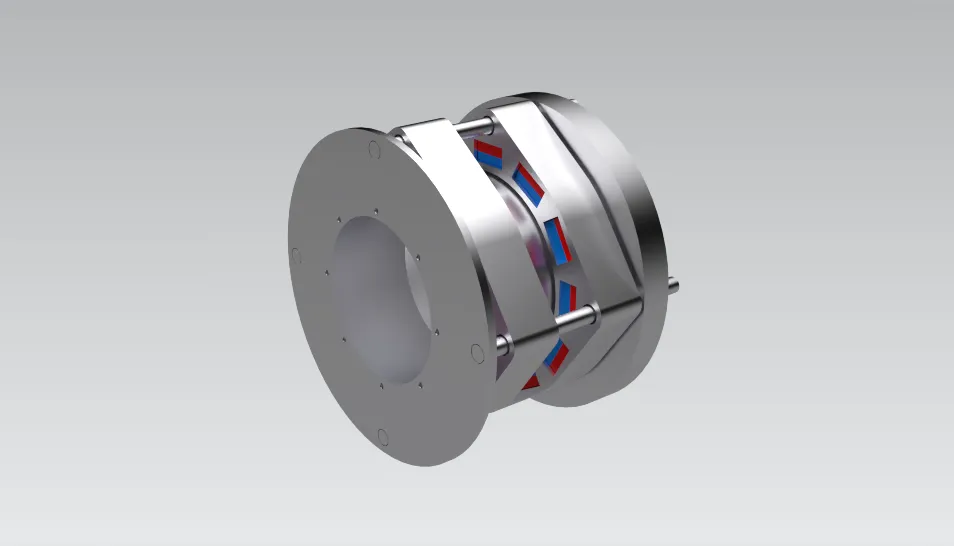 CAD model, version 1.4 | |
| Thruster stage | Propellant ionization |
|---|---|
| Chamber material | Aluminum |
| Propellant | Argon |
The discharge chamber of a gridded ion thruster is the volume in which electrons from the hollow cathode ionize the propellant.
Function
Electrons produced by the hollow cathode (IonSpark) are transported into the chamber, where argon is injected alongside them. When an electron collides with an argon atom with enough energy, the atom is ionized; the fraction of gas ionized grows with the number of collisions. The ions then drift toward the negatively biased grids of the Ion optics, which accelerate them to produce thrust.1
ION-I’s thruster uses argon instead of xenon and, in its first version, has no separate neutralizing cathode.1
Components
- Magnetic rings around the chamber produce a field strong enough to confine electrons and keep them away from the chamber walls. Electrons remain in the chamber longer and ionize more argon.
- An aluminum chamber contains the plasma.
- A propellant injector feeds argon at a constant rate, to be determined during design.