ION-IElectric Propulsion
Initiative

Projects

One thruster, built stage by stage, plus the tools we use to understand it.

Plasma Source · Electron source

IonSpark

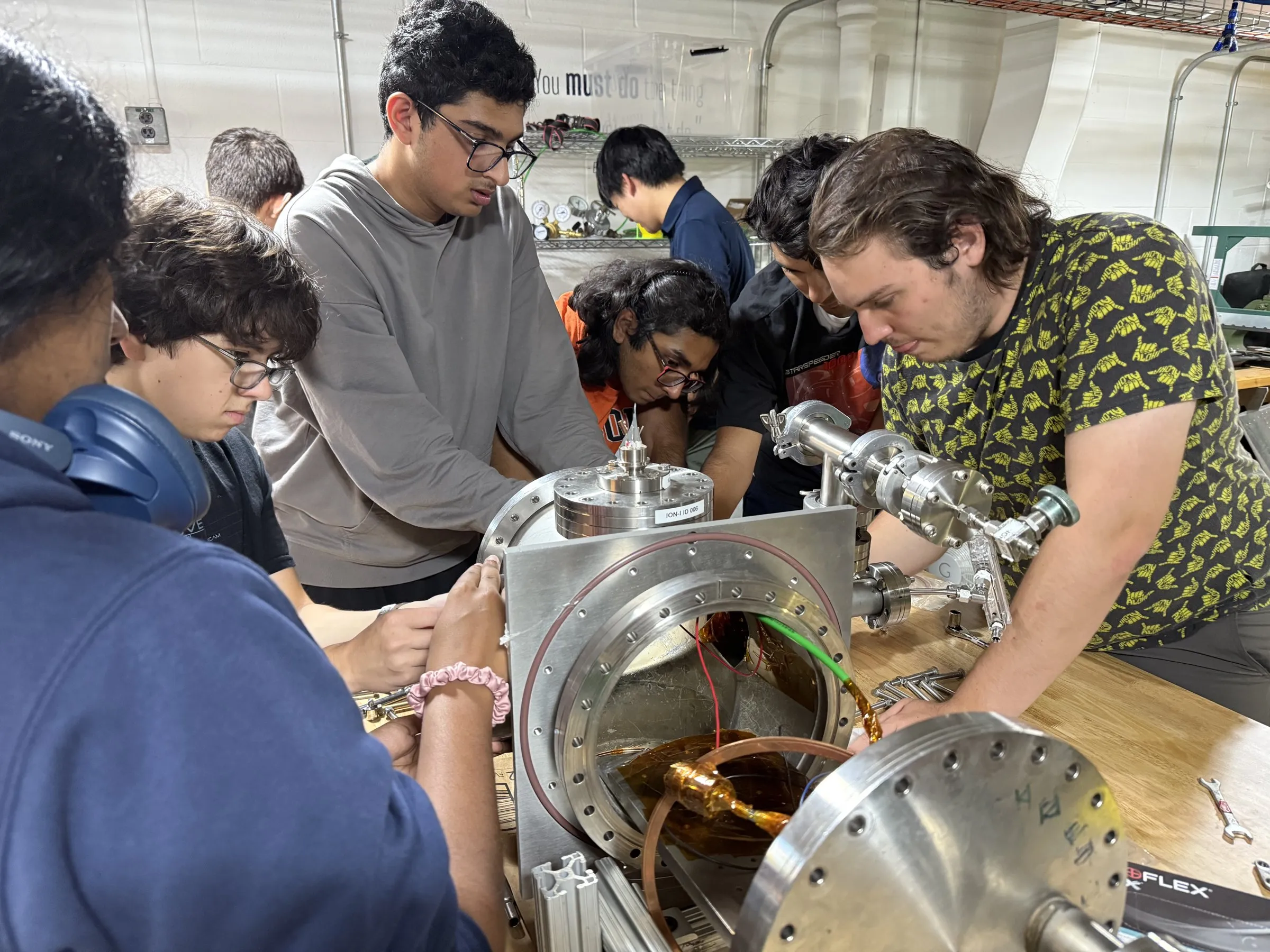
A heaterless, insertless hollow cathode adapted from the microplasma design of Gott and Xu. A tungsten pin inside a quartz tube emits electrons by field emission and ignites an argon plasma, which stepwise ionization then sustains. Shown here: first ignition.

Technical details
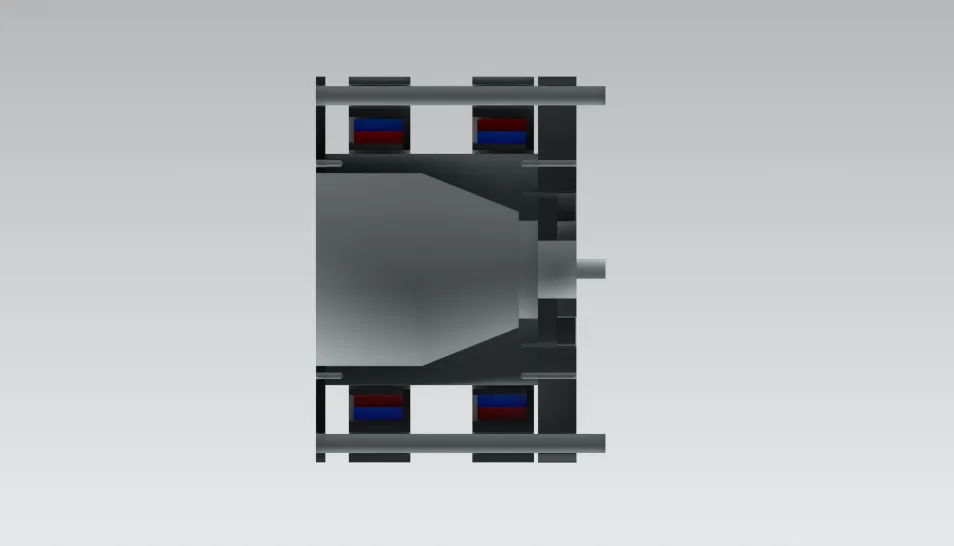

Cutaway CAD render of the discharge chamber, version 1.4

Discharge Chamber · Propellant ionization

Discharge chamber

An aluminum chamber ringed with magnets that keep cathode electrons off the walls, so each one ionizes more argon. Now at version 1.4, with magnetic field and structural simulations run in Ansys.

See the design
HollowcathodeDischarge chamberMagnetsScreenAccel gridIon beamAr →

All subteams

Gridded ion thruster

Our first thruster. Electrons from the hollow cathode ionize argon in the discharge chamber, and two biased grids extract and accelerate the ions into a beam. Each stage is developed by its own subteam through a staged design review process.

How it works
Rendered particle trajectories from an IonSpark plasma simulation

Plasma Source · Simulation

Plasma simulation

Field-emission models, a stepwise ionization solver for argon, and renders and interactive views of the results. This year the team is writing a research paper on ion kinetics: simulating stepwise ionization of argon in the cathode discharge.

Learn more

Where we started

Our first prototype was an ionic wind thruster driven by corona discharge in air. It taught us early lessons about arcing, electrode spacing, and oxidation.

Read about it